




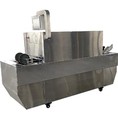

Well, folks! As a supplier of Lab Padding Mangles, I'm stoked to chat about how sensors are revolutionizing these machines, making them way more accurate and automated.
Let's start with the basics. A Lab Padding Mangle is a key piece of equipment in textile labs. It's used to apply chemicals, dyes, or finishes to fabric samples. The goal is to get a uniform application, which is crucial for accurate testing and quality control. But achieving that consistency can be a real pain in the neck. That's where sensors come in.
Temperature Sensors
One of the most important types of sensors in a Lab Padding Mangle is the temperature sensor. Temperature plays a huge role in the padding process. Different chemicals and dyes react differently to temperature changes. If the temperature is too high or too low, it can affect the absorption rate of the fabric, leading to uneven application.
Temperature sensors can constantly monitor the temperature of the padding liquor and the fabric. They send real - time data to the control system of the mangle. If the temperature starts to deviate from the set point, the system can automatically adjust the heating or cooling elements. For example, if the liquor is getting too cold, the heater will kick in to bring it back to the optimal temperature. This ensures that the padding process is carried out under the right conditions every time, improving the accuracy of the results.
Pressure Sensors
Pressure is another critical factor in the padding process. The pressure between the rollers of the mangle determines how much liquor is squeezed out of the fabric. If the pressure is too low, the fabric may retain too much liquor, leading to over - saturation. On the other hand, if the pressure is too high, the fabric may be damaged, and the application may be uneven.
Pressure sensors are installed on the rollers to measure the pressure exerted on the fabric. The control system can then adjust the pressure based on the type of fabric and the desired pick - up rate. For instance, for delicate fabrics, the pressure can be reduced to prevent damage. This level of control is essential for achieving consistent and accurate results.
Liquid Level Sensors
Maintaining the right level of padding liquor is also crucial. If the liquor level is too low, the fabric may not be fully immersed, resulting in uneven application. If it's too high, there may be wastage of the liquor.
Liquid level sensors are used to monitor the level of the padding liquor in the trough. When the level drops below a certain point, the system can automatically refill the trough with fresh liquor. This not only ensures accurate application but also reduces the need for manual intervention, making the process more automated.


Speed Sensors
The speed at which the fabric passes through the mangle can affect the padding process. If the speed is too fast, the liquor may not have enough time to be absorbed properly. If it's too slow, it can be a waste of time and energy.
Speed sensors are used to measure the speed of the fabric conveyor. The control system can adjust the speed based on the type of fabric and the padding requirements. This ensures that the fabric spends the right amount of time in the liquor, leading to better absorption and more accurate results.
Automation and Integration
The beauty of these sensors is that they can be integrated into a single control system. This allows for seamless automation of the Lab Padding Mangle. Operators can set the desired parameters such as temperature, pressure, liquor level, and speed, and the machine will take care of the rest.
For example, once the fabric is loaded into the mangle, the sensors will start monitoring all the relevant parameters. If any parameter goes out of the set range, the control system will make the necessary adjustments automatically. This reduces the risk of human error and ensures that the padding process is carried out consistently and accurately.
Real - World Benefits
In a real - world textile lab, these improvements in accuracy and automation can lead to significant benefits. First of all, it saves time. Operators don't have to constantly monitor and adjust the machine, allowing them to focus on other tasks. Second, it reduces waste. By ensuring accurate application, there's less need for re - work, which means less fabric and liquor are wasted. Third, it improves the quality of the test results. Consistent and accurate padding leads to more reliable data, which is essential for making informed decisions in textile production.
Related Equipment
If you're in the textile testing business, you might also be interested in some of our other products. We offer the Room Temperature Dyeing Machine, which is great for dyeing fabric samples at room temperature. It's easy to use and provides consistent results.
Another great option is the O - type Dyeing Machine. This machine is designed for high - quality dyeing of small fabric samples. It has a unique O - type design that ensures even dye distribution.
And if you're looking for a different type of padding mangle, check out our Horizontal Padding Mangle. It offers a different approach to the padding process and is suitable for a variety of fabric types.
Let's Connect
If you're interested in improving the accuracy and automation of your textile testing process, our Lab Padding Mangles with advanced sensors are the way to go. We're here to help you find the right solution for your specific needs. Whether you're a small - scale lab or a large - scale textile manufacturer, we've got you covered.
Don't hesitate to reach out to us for more information or to discuss a potential purchase. We're always happy to chat and see how we can assist you in making your textile testing more efficient and accurate.